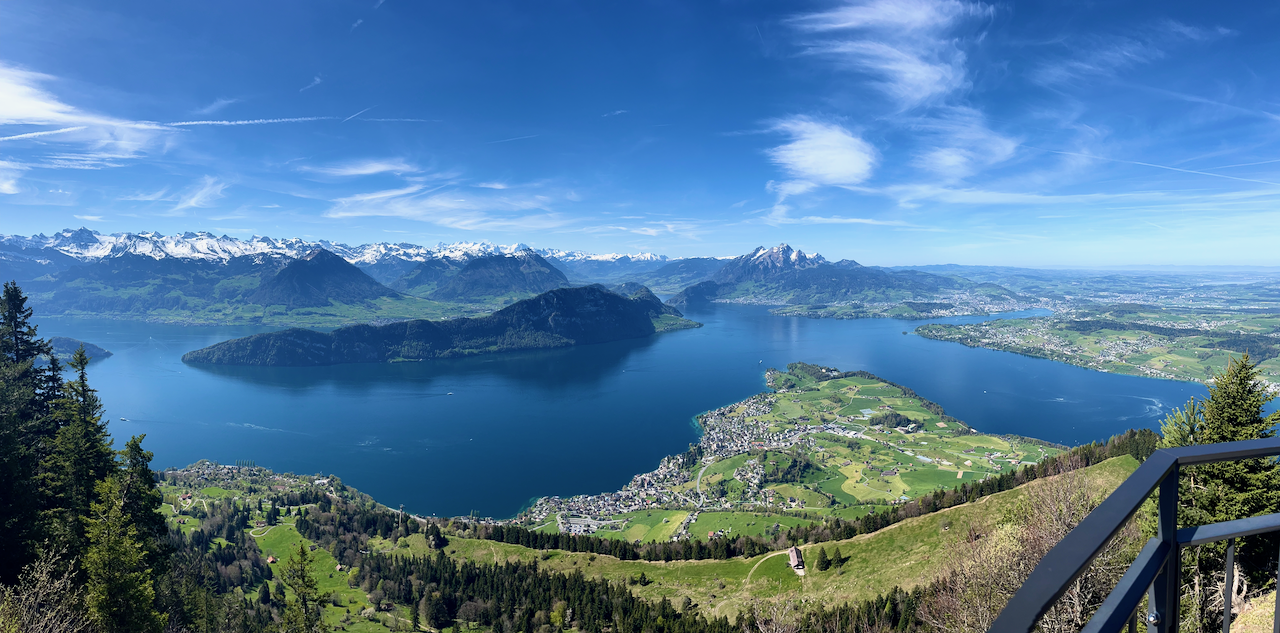
In early 2023 I sold all of my possessions and joined New Zealand’s brain drain by relocating to Switzerland with my wife, Amelia.
Beyond the obvious things, like going from totally surrounded by water to totally surrounded by land, or the whole mountains/cheese/cows/chocolate stuff, here’s a selection of things that surprised me since moving here.
Not wearing shoes is the most insulting thing I could ever do Link to heading
We made a month-long summer trip to Switzerland a year before moving to explore the country and see if it was somewhere we could really see ourselves living long term. One bright summers day, while staying with Amelia’s parents on the Bodensee, I made the honest mistake of walking back the couple hundred meters or so to the house in bare feet after a swim in the lake.
The locals couldn’t believe the sheer audacity of it. I would have gotten less stares had I walked back home wearing absolutely nothing. (I did have a towel wrapped around my waist - but I did quickly check to make sure there weren’t any surprises.)
People literally stopped mid-sentence to turn and stare at the oddity. One waitress stopped what she was doing, turned around, slowly looked me up and down, giving me the dirtiest look I have ever received in my entire life. 1 I couldn’t help but laugh at the situation.
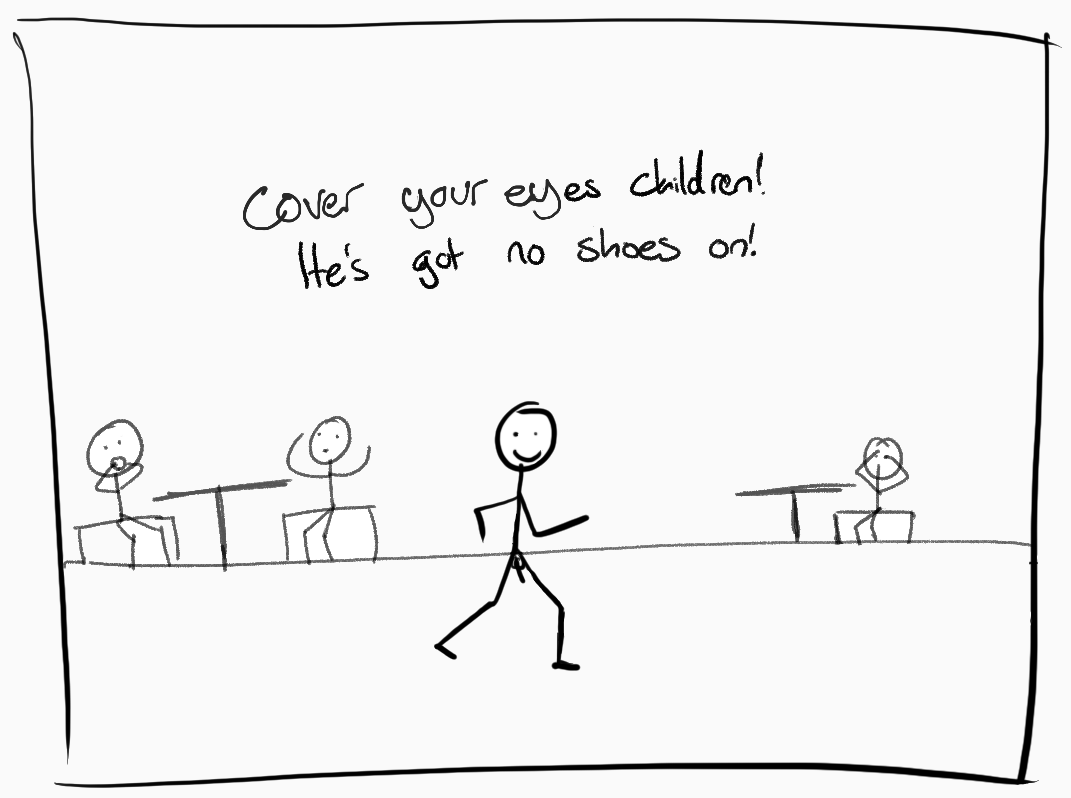
I went back to the lake the next day - this time with slides on - and not a single person even registered my presence.
Lesson learnt: casually not wearing footwear is a very NZ-specific thing. I don’t think I’ll go get some groceries in my dressing gown anytime soon.
I don’t understand anybody, but that’s ok, because nobody can understand me either Link to heading
I had the great idea of learning German before moving, spending about 4-6 months on Duolingo and flash cards, thinking it would allow me to have basic supermarket-level conversations.
This was useful right up until I tried talking to someone.
Swiss German is for all intents and purposes a completely different language to German. Amelia often says It has the literalness of German, the interconnectedness of French and the expressive tonality of Italian. As a result, It’s practically impossible to learn without growing up here. Since it has no standard form, there is bugger-all in the way of resources and support for learning how to speak it.
Whats more is that the Swiss are incredibly fluid with their language skills - almost everyone I have met in Zürich speaks German, Swiss German, English and often something else like French or Italian, which totally blows my monolingual brain. The downside of this is that they are used to switching language to match who they are talking to. When I attempt a conversation in German, they will immediately pick up on my grammar/accent and switch to English, even if their English is worse than my German!
…Then there’s the Kiwi accent. Despite joining an English-standardised company, nobody had heard the world’s sexiest accent before. Turns out, we mumble a lot, have a lot of strange words, and talk in a pretty funny way (I completely forgot this until my old flatmates came over for a weekend to visit - that was a rude reminder of the kiwi twang). For the first few days at my new company, almost everything I said was met with blank stares. They gradually adjusted to my accent, and I quickly dropped saying things like “lets go sit out on the deck” because of the giggles it caused.
One thing I am very happy about is that “she’ll be right” is now a common phrase in my company, and I am developing a cunning plan to slowly drip feed more kiwi-isms into the workplace vernacular.
I haven’t needed to drive a car, which is awesome Link to heading
This one is often the most surprising for folks back home to hear, despite them knowing that Switzerland has absolutely world-class public transport. I haven’t driven a car once since moving here, and I don’t plan on owning one for as long as possible.
It’s hard to overstate just how awesome the transport system is here. Living in Zürich, I have the option of taking the Tram, Train or Bus to work in the morning - and it’s almost always bang on time, even during rush hour. The official statistic is that 92% of trains come on time (within 3 minutes of scheduled arrival time, which is a stricter definition than most countries), and 99% of connections are guaranteed. Part of this awesomeness is due to the integrated timetable system, which places the entire country’s network on a synchronised timetable, and means you never have to wait more than 10 minutes at a station for nearly all possible trips. When I lived in the Hutt Valley, where the bus timetables were more like a gentle guideline, I had to adopt a Zen-mindset. It will arrive when the winds of the universe deem the time is right.
I’ve gone from being exasperated that the bus actually showed up, to being exasperated when the the bus comes more than a few minutes late… even in the middle of a tiny town in the alps. There are bus-stops in the middle of absolute nowhere servicing two farm houses which come more frequently than the bus to my old neighbourhood in Upper Hutt (one with ~2000 people).
The other thing that surprised me isn’t just how close together everything is, but also how quickly I got acclimatised to it. Rather than sprawling cities, Switzerland has a kind of “village sprawl”, with nearly 50% of people living in villages between 1000 and 10,000 inhabitants. There’s also close to 9 million people living in a space that basically fits entirely within the mainland of the North Island:
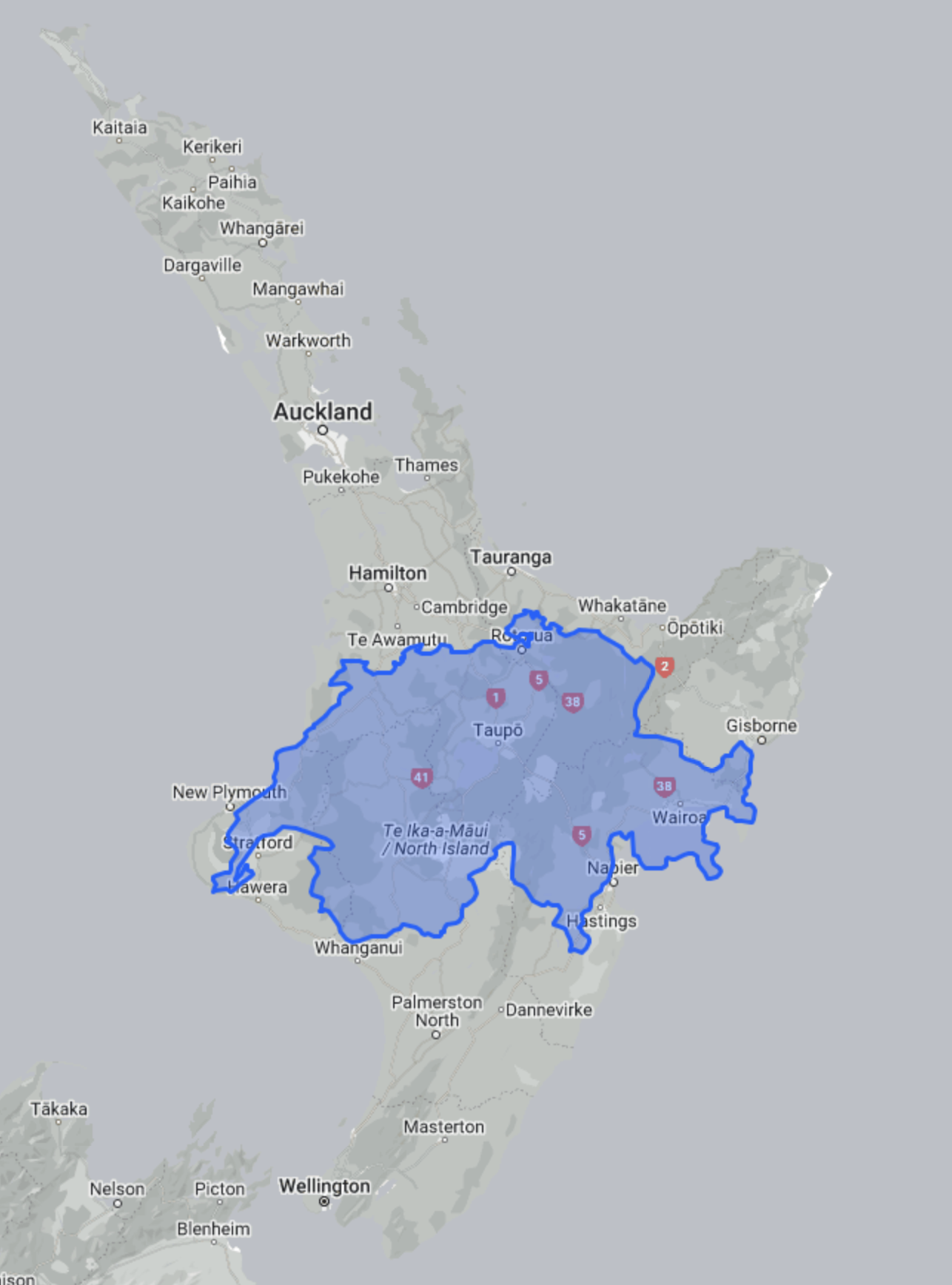
True size of Switzerland, source
So everything is really close together. I got very used to jumping between towns to go run some errands or get some quick shopping done.
For me, the days of jumping in the car for a casual 8-hour drive from Welly to Auckland are well over - nowadays I wouldn’t even dream of such a thing. It’s taken such a quick time to completely re-wire my brain to understand that car reliance, despite the claims of the freedom it gives, can actually tie you down. Being able to do my German flashcards on the way to work or read a book on the train home from a long hike is a newfound freedom. It’s safer than driving, is cheaper and less overhead than owning and maintaining a car, and more comfortable: I can walk around, use the bathroom, or even use the train’s restaurant.
People here are built differently Link to heading
Switzerland has one of the lowest rates of obesity of any western country (around 11% in 2024). For contrast, NZ is 34.5%. This confused me at first, because the food here is very much meat, carbs and cheese-based - But then I saw how much people move. With 65,000km of hiking trails (seriously, just look at this map), you could be out walking every weekend for your whole life and not get bored. Then theres the snow-shoe trails, the ski-touring trails, the ski resorts, the Via Ferratas, the mountain bike trails and cycleways…
I get up at about 6-7 am every Sunday morning for a walk out in the mountains somewhere. Every time, rain or shine, the train there is packed with gaggles of oldies, decked out with their bright-coloured uniform rain pants, full back-backs and walking sticks.
They go everywhere too - even out in the remote wop-wops, and it’s a great motivator. Getting tailed by a strong legged, grey haired powerhouse of a woman in her mid-70s charging her way to the summit of a 1700m high hill is a great motivator to not dawdle on the trail.
Houses are built differently Link to heading
Compared to my last 3-4 flats I lived in in Wellington and Auckland, where the walls were held together with paper mache and hope, the houses here are built to last.
Just to demonstrate this, my coworker for example just moved apartments, and the walls in his new place are so thick that he completely loses wifi reception between rooms. We currently live in a four-story apartment block, made almost completely from brick and concrete, and we had the heating off for most of the winter. It’s absolutely wonderful.
Most places have a small bunker in the basement, complete with emergency bedding, food and supplies, and protected by a large nuclear blast-proof door. Sometimes there are tunnels to other bunkers in other buildings. I had never seen a basement before in my life before coming here. Many basement bunkers originated from Cold War tensions, leading to a policy requiring nuclear bunkers in all new homes. That law has since been relaxed slightly, but large apartment buildings are still required to build ones - so they’re quite common.
One of my favourite quotes from the fantastic life swap animated video series about a Kiwi and a German switching places summarises my entire flatting experience:
Jörg: It’s so cold in here. Where is your central heating?
Duncan: Oh, you mean the central heater. It’s in the lounge! points at $30 Warehouse-brand oil heater only used for special occasions
I will absolutely not miss waking up in the morning, snapping off the icicles that grew on my nose overnight, cleaning the mould off the single-glazed windows and jumping into my winter jacket and pants just to go to the loo.
There’s some quirks to renting here though. For example, the fact that we have to install our own lighting fixtures when you leave the apartment: you take everything away, patch up the holes you drill and just leave a dangling cable, only for the next person to have to re-drill holes to install their own lights.
Our rental contract, a veritable tome of indecipherable german the size of a small country’s constitution, had some gems like:
- no showering or flushing the toilet after 10pm
- no beating your rug outside between the hours of 12-1pm
- obligatory professional cleaning at the end of your tenancy (this is actually a city bylaw) - none of NZ’s “reasonably clean and tidy” bullshit, the landlord will go and swipe their fingers on the inside of your light shades for dust and fail your inspection based on that.
Switzerland has a very low rate of home ownership in comparison to NZ (39% vs NZ’s 64%). There are a lot of reasons, ranging from it being too damn expensive to get one in the first place, very strong tenant laws (such as a blanket ban on rent increases unless the reference interest rate changes) and a strong culture on staying put means that rentals are lived in for a very long time.
It’s also a total ball-ache to move. Firstly, brace yourself, you have to pay a bond of 3 months, and the first month up front… our ~2200.- chf per month Zürich apartment (which is a good deal for Zürich) cost a cool ~$16,500 NZD just for the privilege of signing the lease. If you also try leave outside of specific dates throughout the year - of which there are only 2 or 3 - you have to do a lot more of the work yourself, such as advertising the property and finding prospective tenants. Oh and you need to give 3 months notice for that, too.
My dream is to eventually own a house here - hopefully somewhere rural-ish where I can hike and ski to my hearts content. But still, as the median house price reaches CHF 1,200,000 ($2.1 million nzd at the current exchange rate of $1.82), I know that it’s an uphill battle for a first-generation immigrant who’s bank account got totally wiped out just getting set up.
Money Link to heading
I had quite the shock when I looked at the salaries in Switzerland and realised just how much we got screwed over in NZ.
As a software engineer, I was making as much annually as a window cleaner does here. Of course though, looking at the raw numbers doesn’t make much sense unless you compare it relative to other salaries and the cost of living. Whats definitely true is that our quality of life increased dramatically. We went from sharing a flat in NZ with two other people, barely saving any money per month and having to live frugally, to having our own nice apartment, eating good food each week and being able to take holidays.
The cost of everything here took a while for me to adjust to though while we were still living on NZ dollars. It took about three months of me saying “that X is Y dollars in NZ!!” to my wife before she threatened to send me back to NZ. Some egregiously-picked examples are a kilogram of steak from the supermarket costing $100NZD or a bottle of sparkling water at a restaurant being $20 (that one hurt).
They get you out of nowhere too. We had - and not a word of a lie - a “Random F***ing Swiss Bills” budget item that we put a bit of money into every month, which was used far more frequently than we liked. No matter how well we thought we had planned, there was always a nice surprise waiting. It got to the point during the first few months where I started getting heart palpitations every time I saw a letter in the letter box. Thankfully the palpitations have now reduced to occasional stutters now that we’ve settled in fully and we’ve built up a bit of a buffer.
The Swiss system is built on high levels of individuality and personal autonomy - and that is reflected in the tax system. Kantonal and Federal taxes only take something like 10% from of my annual income, as opposed to ~35% in NZ (although one thing that sucks is the “marriage penalty” that arises from having both your income summed together, so you are taxed at a higher rate).
Of course these lower taxes mean that the subsidies for many things are much lower, and you pay a lot out of your own money. Take, for example, healthcare. Switzerland’s healthcare can without a doubt be regarded as absolutely world-class. Amelia got an MRI within a week and an ADHD test within two - which is unheard of in NZ - and the care she got was absolutely phenomenal with amazing facilities and highly attentive, empathic medical staff.
However, it was all paid for with private insurance. Switzerland has an obligatory health insurance system which everyone needs to pay for, scaling with age rather than income. For people like me, that typically don’t need to go to the doctor (or can’t afford the monthly franchise), we get the highest excess of 2500.- CHF a year to reduce the monthly premium and roll the dice with our health. This unfortunately means that if you need to go to the doctor, you have to pay out of pocket. I got bacterial tonsillitis earlier this year, and after a couple of blood tests and some medicine I had to pay nearly $600. (It didn’t help that the chatty GP billed in 5 minute increments either!)
Final Thoughts Link to heading
I’d love to continue this post, with stories like how I nearly gave a Swiss person a heart attack by suggesting we get dinner in a week (we eventually agreed on a booking two months out), or how my coworker got a strongly worded letter in his door from a neighbour for not stacking the paper recycling out in a neat enough bundle. Or, how Amelia, who was very clearly in a rush to get to the bus, was stopped and lectured very sternly by a elderly shop clerk about the importance of promptly informing the staff about the lack of 10c cutlery in the store cabinet.
Despite being here for only a little over a year, it’s really widened my world knowledge already. I had to delete a few rants about things like NZ’s Small Island Syndrome and the realisation of just how much damage the colonial mindset in NZ has caused. Living in a place that has the basics figured out like multi-lingual road signs really drove home that NZ has a long way to go to being a true multi-cultural society.
There is a lot more stuff I want to write about - for example, the high-trust vs nanny-state culture between the countries, what it was like getting a visa, the horrendous smoking culture and more, but I’ll probably leave those for a future and more serious blog post. you can subscribe here to get notified via email/rss about my new posts.
I’ve gotten used to the cost of things and my language skills are improving every day, and I’ve learned to wear appropriate footwear. Overall though, I absolutely love this country and am excited to call it my home for a very long time.
-
Amelia pulled me up on this, saying it sounds like hyperbole, but I swear it wasn’t. The waitress looked at me like I had just insulted her whole upbringing. ↩︎